Commerce Connections London: Why the future of retail growth starts with the customer
What does growth look like when customers are more considerate about where they spend, expectations of service are rising, and retailers have more technology at their disposal than ever before?
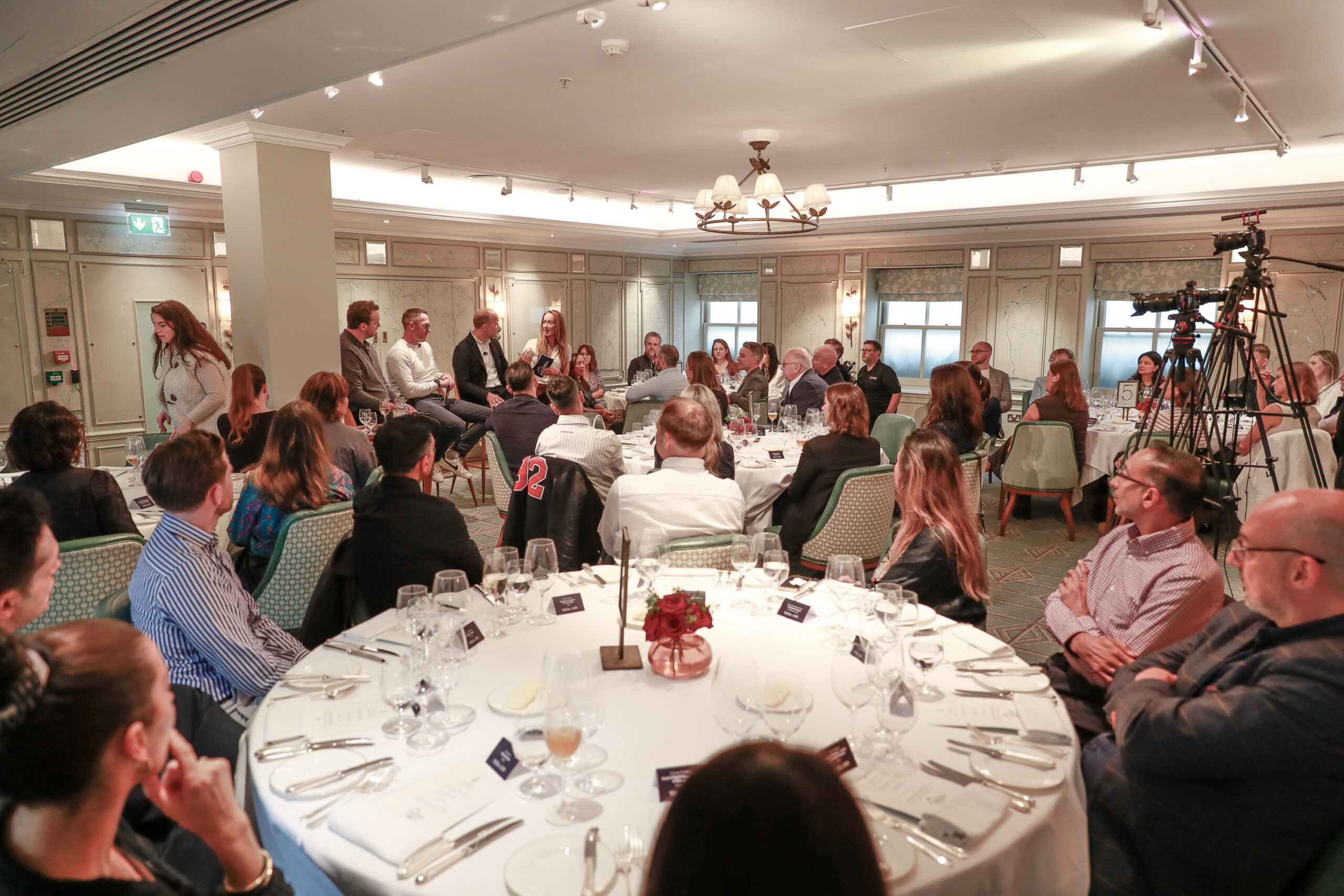
That was the conversation at the heart of Commerce Connections London, as Tryzens brought together leaders from across the retail and commerce community for an afternoon at Fortnum & Mason.
Hosted in partnership with Shopify, ESW, and Klaviyo, the latest Commerce Connections event moved the conversation away from the technology hype cycle to focus on something more fundamental: how customers are changing and what brands need to do in response.
Moderated by Stephen Rogan, Head of Customer Success at Shopify, the panel brought together:
- Iain Robertson, Chief Operating and Innovation Officer at Fortnum & Mason
- Rebecca Howat, Managing Director at Charles Tyrwhitt
- Rob Kay, Technology Director at Naked Wines
The panel discussed customer behaviour, brand, personalisation, technology, and what sustainable growth really looks like.
Customers are looking for more than a transaction
Across three very different businesses, a common theme quickly emerged: today’s customer is becoming more deliberate about where they spend their money and what they expect in return.
For Naked Wines, that has meant a shift away from the discount-led acquisition environment that characterised parts of the market in previous years. Customers increasingly want to understand the products they’re buying, where they have come from, and the people behind them.
“They want experiences. They want to touch the product. They want to be in it,” Rob explained. “We are seeing that for a certain cohort of people, they are increasingly prioritising the authenticity of the product and experience over getting the lowest possible price”.
At Fortnum & Mason, that desire for experience is manifesting itself through community. Its third-floor Food & Drink Studio alone hosted 400+ events over the previous year, bringing together customers around a shared passion for food and drink. This sense of community is further demonstrated in their membership programme, where they have seen incredibly high levels of member engagement and retention.
“Community and belonging [are] really, really important,” Iain explained. “It’s all about wanting to be here with like-minded people that love food and drink as well.”
Charles Tyrwhitt’s experience was different again. Emerging from a particularly challenging period for formal menswear prompted the business to return to the fundamentals of its brand and reconsider exactly what its customers needed.
“We went back to basics,” Rebecca said. “What is it that we stand on as a brand? We say it’s about how we make it easy for men to dress well.”
That focus has become increasingly important as customers think more carefully about purchases. Rather than simply looking for formal or casual clothing, Charles Tyrwhitt is seeing customers shop around occasions and versatility, with quality and value playing an increasingly important role in their decision-making.
Personalisation has to feel personal
As customer expectations change, the panel also explored how technology can help brands create more connected experiences without losing the human qualities that make those brands distinctive.
Fortnum & Mason has been investing in creating a more complete view of the customer across its channels, allowing interactions in areas such as hospitality, retail and ecommerce to become better connected.
The opportunity is not simply to collect more customer data, but to use it to recognise people and make subsequent interactions genuinely more relevant.
“We believe our customers want us to recognise them when they come here or online, and they want that personal experience,” Iain said.
For Rebecca, effective personalisation comes down to making the customer’s life easier. If a customer repeatedly buys the same shirt size, for example, the experience should recognise that behaviour rather than forcing them to start again each time.
Recommendations should similarly reflect what an individual is actually likely to want rather than simply presenting the same products to everyone.
“That personalised journey, really being able to adapt into that, I think is one of the strongest things that you can have,” she said. “People feel like individuals, and that means that they’ll part with their money.”

Technology should make experimentation easier, not harder
For Naked Wines, the technology challenge has been somewhat different. Having historically built significant parts of its commerce infrastructure itself, the business is now looking at how modern platforms can remove complexity and allow teams to concentrate on what genuinely differentiates the brand.
That includes bringing the stories of its winemakers closer to customers, embedding richer content and, crucially, making it easier for teams to experiment.
“We don’t necessarily know the answer, but we need to be able to test. We need to be able to learn,” Rob said.
The ability to test quickly also changes an organisation’s relationship with failure. When experimentation requires months of development and significant investment, every decision becomes inherently high stakes. When technology enables smaller, faster experiments, learning itself becomes valuable.
Rebecca echoed that philosophy from Charles Tyrwhitt’s perspective: “If you’re not failing seven times out of 10, you’re not testing enough. You do have to fail, fail fast, learn again, get up, and try.”
The lesson was not that technology provides the answer to every customer challenge, but that the right technology creates the freedom to find those answers faster.
Growth doesn’t always mean getting bigger
Perhaps one of the most interesting themes of the discussion was how each business now thinks about growth.
For Charles Tyrwhitt, growth has come from resisting the temptation to chase every available opportunity. Instead, the business has concentrated on understanding its customer, strengthening its proposition, and expanding in ways that remain consistent with the brand.
“For us, growth has been about doing what we do, doing it even better, and doing it with consistency and direction,” Rebecca explained.
At Naked Wines, meanwhile, the emphasis is on having the right customers rather than simply the largest possible customer base. As a subscription business, the quality and longevity of the relationship matters.
That has led to a renewed focus on simplifying technology, processes, and propositions so the organisation can concentrate on attracting and retaining customers who genuinely value what Naked Wines offers.
Fortnum & Mason offered another perspective. Having traded from Piccadilly for more than three centuries, growth has to be considered over a very different horizon.
“We have a lot of discussions about what type of growth we want,” Iain said, describing the objective as long-term, sustainable growth. The challenge is to continue evolving the business while protecting what customers already value about it: “How do we make the customer feel like nothing’s changing and at the same time everything’s changing?”
Together, the three perspectives pointed towards a broader definition of successful growth: not expansion for expansion’s sake, but growth that strengthens the customer relationship and remains true to the brand.

Brand matters more when customers have more choice
Underlying much of the conversation was the importance of knowing what your brand stands for. As customers become more selective about their spending, competing solely on price becomes increasingly difficult. Experience, service, quality, community, and a clear sense of identity give people another reason to choose one business over another.
For Charles Tyrwhitt, that means continually returning to its purpose of making it easy for men to dress well.
For Naked Wines, it means reconnecting customers with the wine and the winemakers behind it.
And for Fortnum & Mason, it means creating experiences capable of delivering something less easily quantified, but equally valuable: joy.
“We talk a lot here about bringing joy,” Iain said. “You can get lost in the day to day… but [it’s about] making sure you can spend as much time thinking ‘what can you do for the customers?’”
Customer, customer, customer
As the panel drew to a close, each speaker was asked to leave the room with one piece of advice.
For Rebecca, the answer came back to people. Great products and ambitious strategies can only take a business so far without a strong team that has the autonomy, transparency, and shared vision to execute them.
Iain returned to Fortnum & Mason’s focus on creating joy and the importance of occasionally stepping outside the demands of everyday operations to consider what the business can do differently for its customers.
Rob’s answer distilled much of the afternoon into three words: “Customer, customer, customer.”
“Everything we do, every decision we make: what’s it going to mean to our customer? What’s the experience going to be like?” he said. His second lesson was equally simple: when genuine transformation is required, businesses need the confidence to commit to it rather than endlessly chipping away at the edges. “If you’re going to make the change, let’s do it.”
It was an appropriate conclusion to an afternoon in which technology was certainly part of the conversation, but never the destination.
Across customer experience, personalisation, brand, experimentation, and growth, the message from Commerce Connections London was consistent: start with the customer, understand what genuinely matters to them, then build the people, technology, and experiences around delivering it.